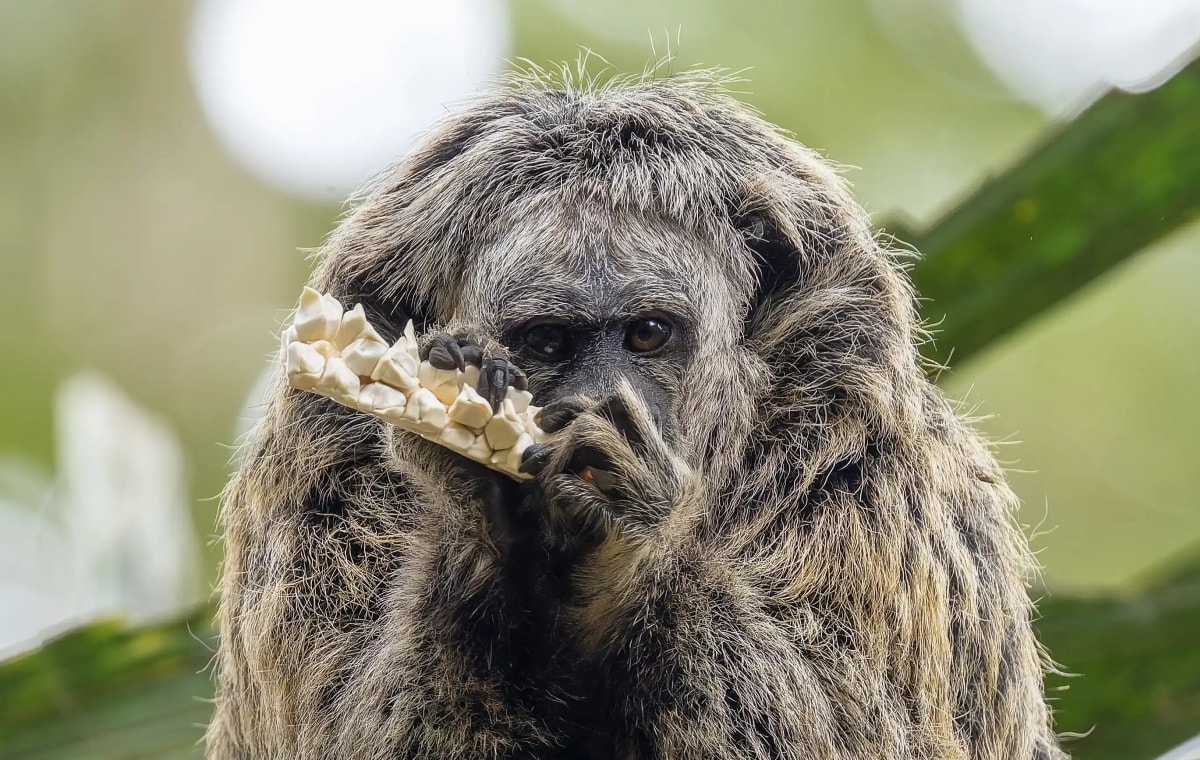

On June 20, we welcomed a group of researchers, nature photographers and conservation professionals to Jardim da Amazônia. They traveled through trails and rivers with a shared purpose: to document the diversity of primates in the Southern Amazon and strengthen the Primates Route of Mato Grosso.
The expedition brought together primatologist Dr. Gustavo Canale of Instituto Ecótono; nature photographers Luciano Candisani and Cibele Manfredini; and biologists Miriéli Costa Ramos and Loianne Curvo.
It also included Rodrigo Gerhardt of World Animal Protection, broadening the dialogue between science, communication and conservation.

A strategic territory for primates
In addition to producing images, the group recorded species such as the parauacú (Pithecia mittermeieri), the black-faced spider monkey (Ateles chamek) and other primates that use Jardim da Amazônia’s forest areas.
The initiative is part of the outreach actions of the Primates Route of Mato Grosso, a project coordinated by Instituto Ecótono in partnership with the Federal University of Mato Grosso (UFMT), the Brazilian Primatology Society, the National Center for Research and Conservation of Brazilian Primates (CPB/ICMBio) and Sebrae Mato Grosso.
Officially launched during Avistar Brasil 2026, the route promotes Mato Grosso as a destination for responsible primate observation.
Conservation also means connecting people, science and territories.
Jardim da Amazônia: conservation every day
Founded by the Zanchet family in 1997, Jardim da Amazônia Lodge has become an international reference for birdwatching, wildlife tourism and nature conservation.
Located in São José do Rio Claro, Mato Grosso, at the Amazon–Cerrado transition, the property maintains forest areas in the Rio Claro Valley and, since 1997, has connected hospitality, support for research and responsible wildlife observation.
In 2023, in partnership with Instituto Ecótono, the Jardim da Amazônia Research Station was established to support scientific studies on primates, large mammals and Amazonian biodiversity.
Today, the station hosts research on the parauacú, the black-faced spider monkey and jaguar monitoring, welcoming Brazilian and international researchers interested in understanding one of the most biodiverse regions of the Southern Amazon.
Tourism that protects
Recognized as an Important Bird Area (IBA) and part of the Feel Brasil community, an initiative of Embratur and Sebrae, Jardim da Amazônia has 600 recorded bird species, as well as dozens of mammal, primate, reptile and amphibian species.
Its work demonstrates that hospitality, scientific research and conservation are not separate activities. Together, they become a powerful strategy to protect ecosystems, strengthen local economies and inspire a new generation of travelers.
A future built through partnership
The outreach of the Primates Route of Mato Grosso reinforces the role of partnerships among research institutions, civil society organizations, photographers, tourism operators and private initiatives committed to conservation.
Every expedition, photograph and study helps turn knowledge into protection and visitors into allies of nature.
We remain available to support agencies and partners in building itineraries connected to biodiversity, research and conservation.
Keep exploring the Garden
Read next